Serotiny Part 1
Serotiny
2023-present
Performance and drawing with charred plants
Videos shot and edited by the artist
Featuring Restoring Nature with Fire burn crew
Serotiny refers to seeds that require fire in order to open and germinate, cones sealed tight with resin until heat releases them. Some pine species depend on fire to open their cones and release seed, creating the conditions for regeneration. Fire is not only destruction; it is instruction. It clears understory, returns nutrients to the soil, reduces tick habitat, suppresses invasive species, and makes space for what has been waiting.
The work exists in two parts.
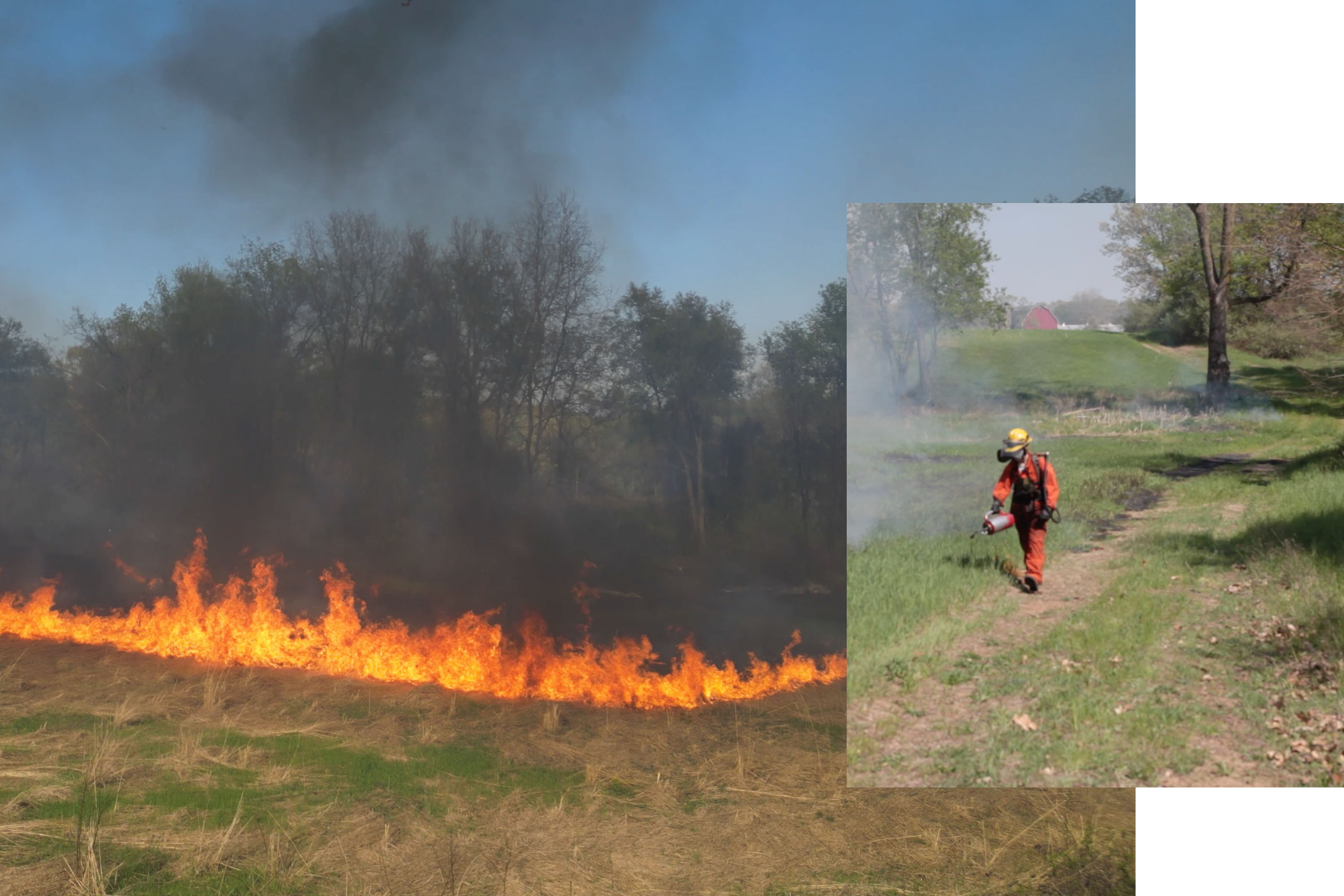
Part I: Labor(above)I work alongside a crew of trained prescribed fire fighters, some employed in conservation, others simply in need of steady work. While Michigan the region does not experience the scale of wildfires common in the American West, its oak savannas, prairies, and pine barrens evolved with periodic low-intensity burns. For eight to twelve hours we carry drip torches through overgrown fields, drawing controlled lines of flame through brush and grass. Later, we retrace our steps wearing heavy water packs, often forty to sixty pounds when full, scanning for smoke and ensuring nothing continues to smolder. The work is repetitive, physical, collective. It is choreography and vigilance.
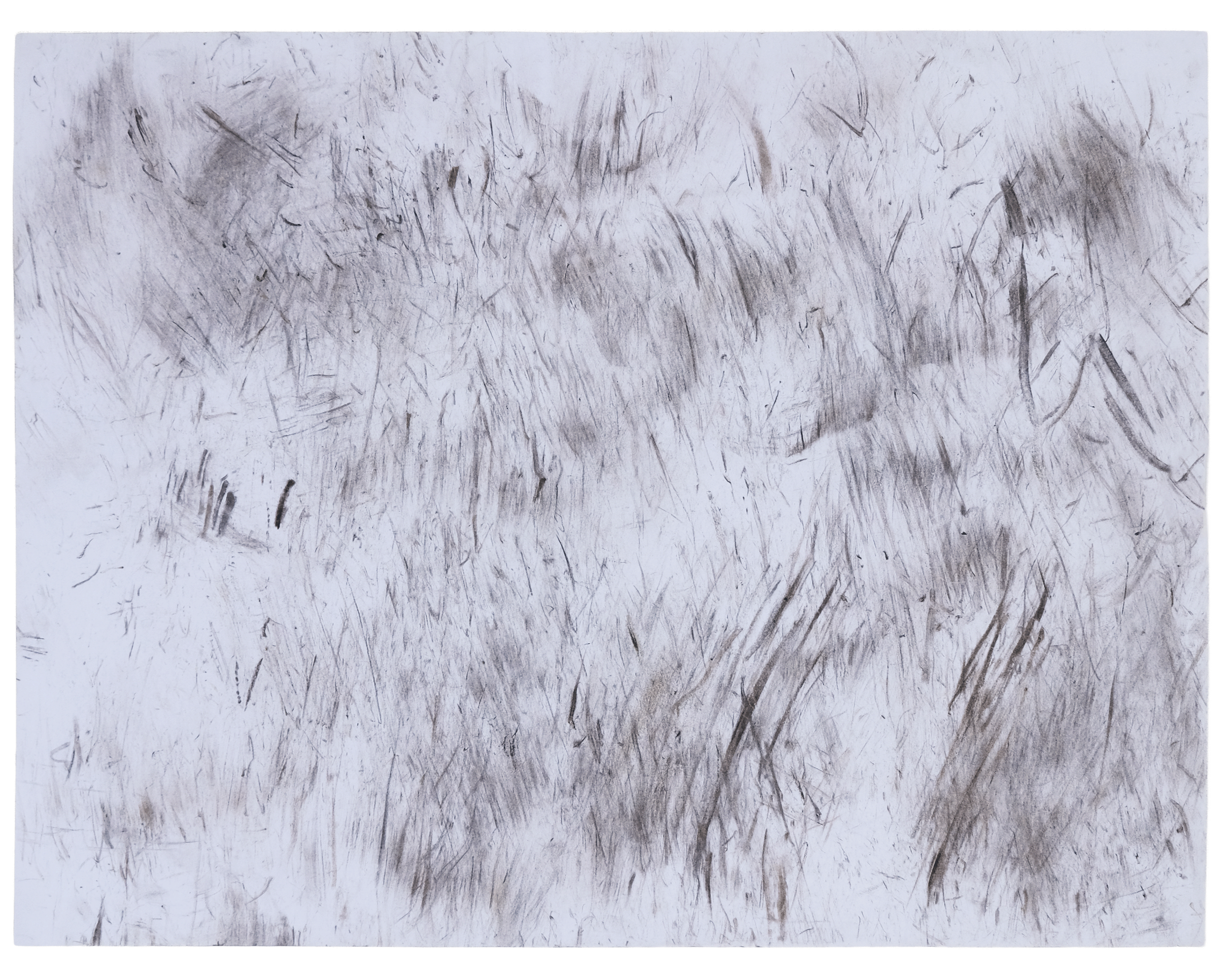
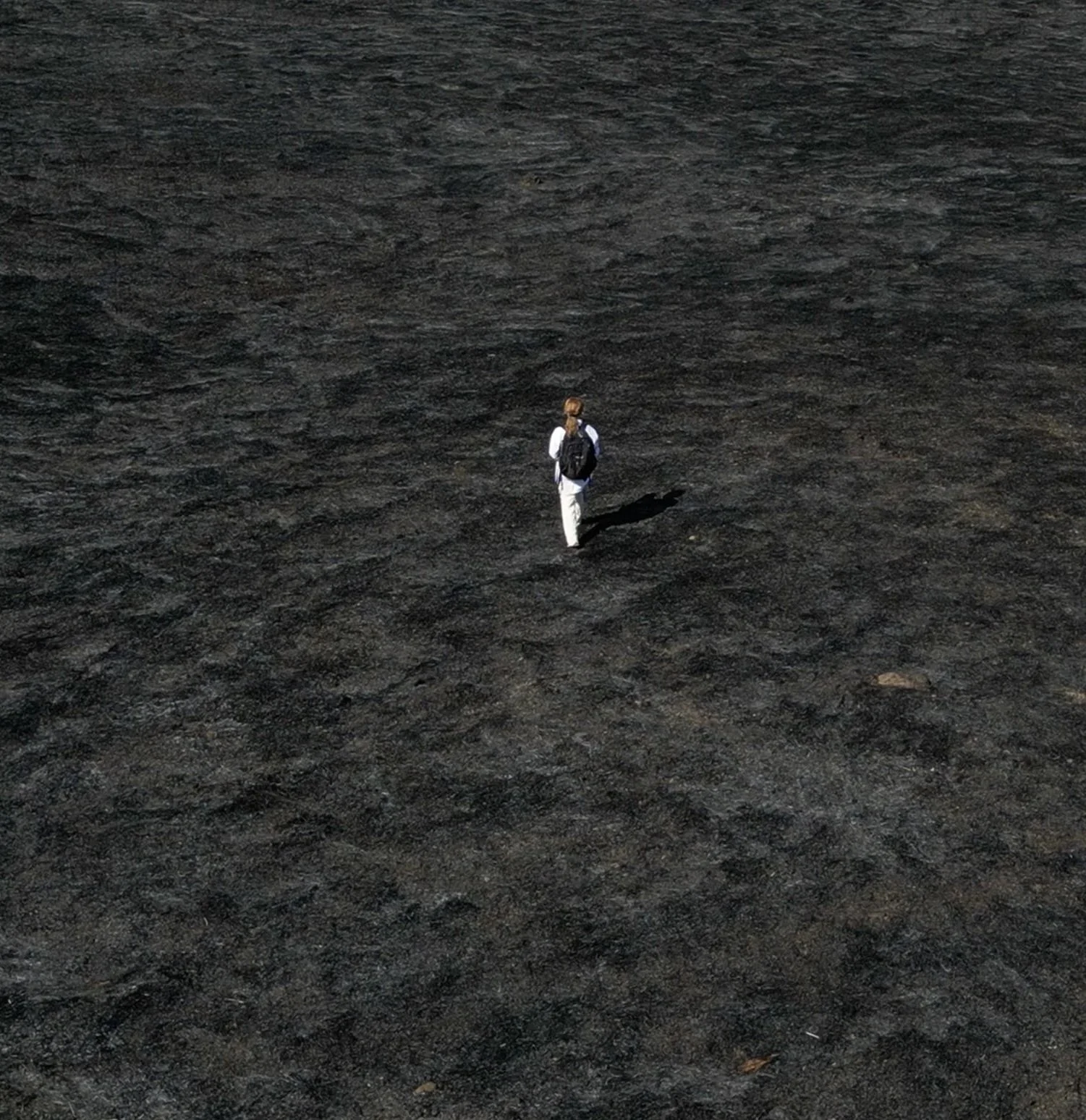
Part II: Ash Drawings (below) I return to the site the following day. The ground is still warm, blackened dust, ash, partially combusted grass. I drag a loose, unstretched canvas into the field and, with my bare hands, transfer large handfuls of ash across the fabric's surface. I prefer to work on the ground where there is no orientation, no top or bottom of the canvas, like standing at the center of a panopticon looking outward. My body shifts and rearranges itself in conversation with cotton and carbon. Pulling charcoal across the fabric recalls the pulling of flame the day before. The material comes directly from the source — carbon that was living matter hours before, now suspended between what it was and what it will feed. I am not representing this moment. I am trying to hold it.
I return to touch what remains. Beneath the blackened surface, life is preparing to open.
Serontiny.

Serotiny Part 2
Intentional burning was practiced by Indigenous peoples across the Americas for millennia, an act of stewardship rooted in intimate ecological knowledge. Through colonization, land dispossession, and the rise of 20th-century fire-suppression policy, these practices were widely curtailed as industrial forestry and agricultural expansion reshaped the continent. The ecological benefits of fire are well established, yet the practice still faces public misunderstanding, liability concerns, and political hesitation. There are people working steadily on behalf of the land, tribal practitioners, ecologists, and conservation crews, continuing this work with care and discipline.